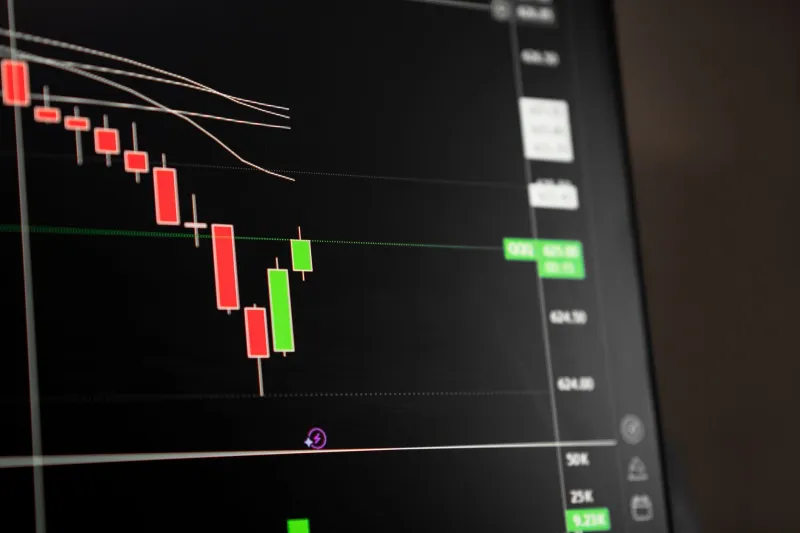
From Obligation to Opportunity: How Trade Surveillance Is Becoming a Competitive Weapon in Global Markets

For most of the past decade, trade surveillance occupied an uncomfortable position in the operational hierarchy of US trading firms: necessary, expensive, and strategically inert. Compliance teams managed it. Executives tolerated it. Traders ignored it. The prevailing view treated surveillance infrastructure as a cost center—a technological toll booth on the road to actual market activity.
That view is becoming dangerously outdated.
A new generation of surveillance platforms, powered by machine learning and capable of processing cross-venue data in real time, is fundamentally altering what these systems can do. Firms that recognize this shift are extracting market intelligence from their surveillance infrastructure that would otherwise require entirely separate analytical investments. Those that continue treating surveillance as a compliance checkbox are, in effect, leaving a significant informational advantage on the table.
The Architecture Behind the Shift
Legacy surveillance systems were built around a narrow mandate: flag suspicious activity, generate audit trails, satisfy regulators. Their logic was retrospective and rule-based—designed to detect what had already gone wrong rather than illuminate what was about to happen.
Modern platforms operate on an entirely different architectural premise. Rather than scanning for predefined violation patterns, they ingest continuous streams of order book data, execution records, communication logs, and market microstructure metrics across multiple exchanges simultaneously. Machine learning models identify statistical anomalies in real time, many of which have nothing to do with misconduct but everything to do with market behavior.
For US firms trading across international venues—from the Tokyo Stock Exchange to the Frankfurt-based Eurex to emerging market platforms in Southeast Asia and Latin America—this capability represents something genuinely new. The same infrastructure that monitors for front-running or spoofing also captures granular intelligence about how liquidity behaves in specific instruments at specific times, how counterparties respond to order flow, and where execution quality degrades under varying market conditions.
Reading the Microstructure Others Miss
One of the most consequential applications of advanced surveillance data involves market microstructure analysis. Microstructure—the mechanics of how orders are matched, how spreads widen and contract, how depth shifts in response to incoming flow—differs significantly across global exchanges, and those differences create exploitable inefficiencies for traders who can identify them.
Consider the behavioral divergence visible in Asian equity markets during the final thirty minutes of trading sessions. Order book depth in these windows frequently appears robust on the surface but collapses rapidly when tested with meaningful size—a phenomenon sometimes described as phantom liquidity. Surveillance platforms monitoring execution quality across these windows can identify recurring patterns: specific instruments, specific session intervals, specific counterparty configurations that consistently produce adverse fills.
This is intelligence that transforms execution strategy. A US institutional trader routing orders into Hong Kong or Singapore equities without this visibility is, in effect, navigating with an incomplete map. One equipped with real-time surveillance analytics can time entries with considerably greater precision, route away from deteriorating conditions before they materialize in the fill, and calibrate order sizing to actual rather than displayed depth.
Counterparty Behavior as a Signal Layer
Beyond microstructure, surveillance data generates a secondary layer of intelligence that sophisticated firms are only beginning to mine systematically: counterparty behavior profiling.
In fragmented international markets, the identity and behavioral tendencies of counterparties are rarely transparent. Yet over time, surveillance platforms accumulate enough transactional data to identify consistent patterns—counterparties that systematically trade ahead of information events, venues where certain order types predictably attract toxic flow, time windows where adverse selection risk spikes across specific asset classes.
This is not speculation. It is pattern recognition applied to real execution data, and it carries direct implications for how US firms should configure their international trading operations. Routing logic, order type selection, and session timing can all be refined based on counterparty intelligence derived from surveillance analytics—adjustments that reduce slippage and improve net execution quality without requiring any change to underlying investment thesis.
The Regulatory Dividend
It is worth acknowledging that this competitive evolution does not diminish the original compliance function. If anything, firms leveraging surveillance data for market intelligence tend to develop more robust compliance cultures as a byproduct. When surveillance infrastructure is treated as strategically valuable rather than operationally burdensome, investment in platform quality increases, data integrity improves, and the analytical rigor applied to flagged activity sharpens.
For US firms subject to SEC and FINRA oversight, as well as the cross-border regulatory requirements imposed by international venues and foreign regulators, this matters considerably. Demonstrating that surveillance systems are actively monitored, continuously updated, and analytically sophisticated carries weight in regulatory examinations—particularly in the post-2020 enforcement environment, where regulators have grown increasingly attentive to the quality of firms' surveillance architectures rather than simply their existence.
The practical implication: investment in next-generation surveillance infrastructure simultaneously satisfies regulatory obligation and generates competitive return. That is a rare alignment of interests, and firms that exploit it gain on both dimensions.
Implementation Realities for Mid-Size US Firms
Large broker-dealers and hedge funds with dedicated quantitative infrastructure have been at the forefront of this evolution. But the architecture is no longer exclusively available to firms with nine-figure technology budgets. Cloud-native surveillance platforms have significantly reduced the capital requirements for deploying sophisticated real-time analytics, and several vendors now offer modular implementations that allow mid-size US trading firms to begin with core compliance functionality and layer in market intelligence capabilities incrementally.
The critical variable is not budget—it is organizational willingness to integrate compliance and trading operations in ways that many firms have historically kept deliberately separate. Extracting market intelligence from surveillance data requires that the analytics generated by compliance systems flow meaningfully to the traders and execution desks who can act on them. That integration is a structural and cultural challenge as much as a technological one.
Firms that bridge this divide effectively will find themselves in possession of a feedback loop that continuously improves execution quality: surveillance data informs execution strategy, execution outcomes refine surveillance models, and the cycle compounds over time into a durable informational advantage.
Precision as a Strategic Asset
The broader principle at work here aligns with what separates consistently profitable international trading operations from those that struggle with chronic execution drag. Precision—in timing, in counterparty selection, in order routing—is not achieved through intuition or experience alone. It is achieved through systematic analysis of granular data, applied consistently across every dimension of the execution process.
Trade surveillance, properly deployed, is one of the most data-rich environments in a trading firm's operational stack. The firms that recognize this and act accordingly are not simply meeting their compliance obligations more efficiently. They are building a structural edge in global markets—one that regulators inadvertently mandated and competitors have been slow to recognize.