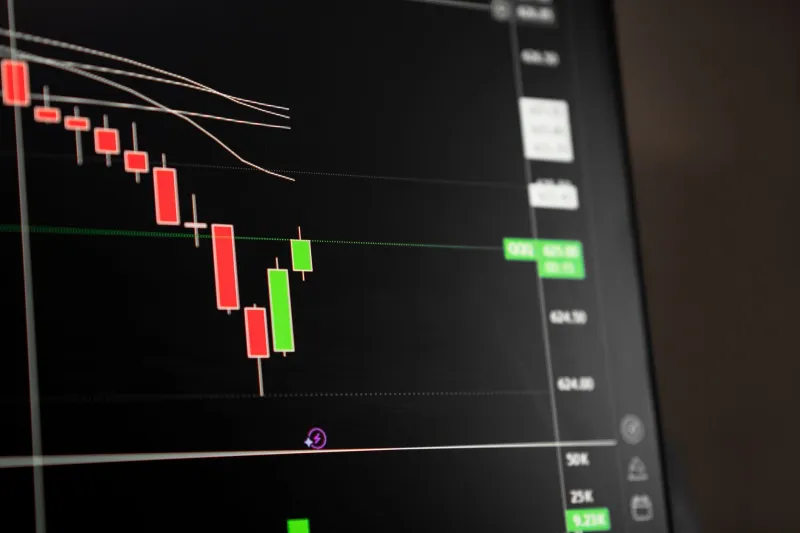
Phantom Depth: How Asian Market Liquidity Deceives Traders When It Matters Most
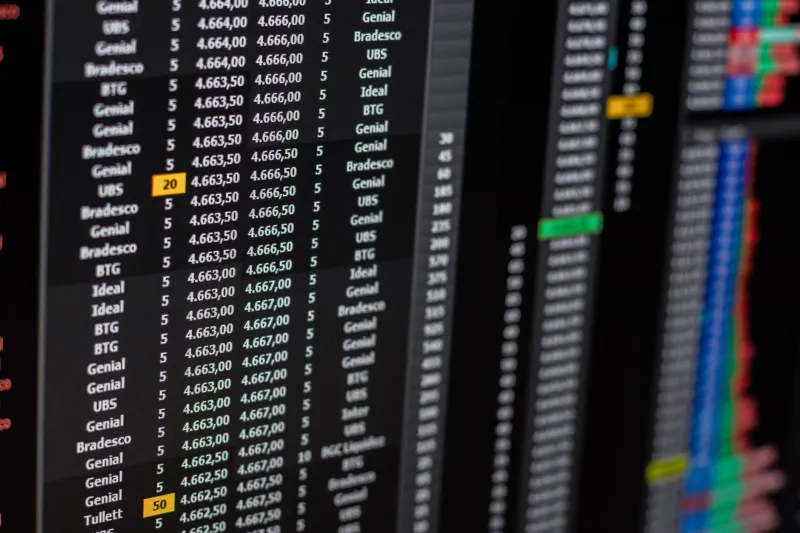
For US-based traders accustomed to the deep, institutionally anchored liquidity of domestic exchanges, Asian markets can appear genuinely inviting. Aggregate volume figures across venues in Tokyo, Hong Kong, Seoul, and Shanghai frequently run into the hundreds of billions of dollars daily. Screens look active. Bid-ask spreads appear tight. And yet, experienced professionals who have attempted to unwind sizable positions during periods of stress will describe a common and unsettling experience: the liquidity that appeared so abundant on the way in seems to vanish almost entirely on the way out.
This is not a glitch. It is a structural feature of how many Asian markets are composed — and it carries serious implications for any US investor or trader allocating capital to offshore venues in the Asia-Pacific region.
The Architecture of a Misleading Order Book
Order book depth, as displayed on most trading platforms, reflects resting orders at various price levels. In theory, a thick book signals that large trades can be executed without significantly moving price. In practice, this assumption breaks down in markets where a disproportionate share of resting orders are placed by participants who withdraw them the moment conditions shift.
In several major Asian markets, high-frequency market makers and retail-oriented liquidity providers account for a substantial fraction of visible order book volume. These participants are not committed liquidity sources in any meaningful institutional sense. They are opportunistic, latency-sensitive, and programmed to cancel orders at the first sign of directional pressure. When a US fund manager attempts to liquidate a position of genuine scale — say, $50 million in a mid-cap Korean equity or a meaningful notional in offshore Chinese renminbi — those resting orders evaporate before the trade reaches them.
The result is a phenomenon traders call "slippage cascading": each partial fill moves the market further from the original quoted price, triggering additional cancellations deeper in the book, and the final average execution price lands far below what the pre-trade analysis suggested was achievable.
Retail Participation and the Illusion of Institutional Depth
One of the most underappreciated dynamics in Asian market liquidity is the outsized role of retail investors. Japan's equity markets have historically attracted significant individual participation. Taiwan's exchange routinely sees retail traders accounting for well over half of daily turnover. In mainland China, retail participation on the Shanghai and Shenzhen exchanges has, at various points, represented the dominant share of trading activity.
Retail-driven volume is not inherently problematic. But it creates a specific type of liquidity profile that differs fundamentally from what US professionals encounter on the New York Stock Exchange or Nasdaq. Retail participants tend to cluster around momentum and sentiment cycles. They add volume when markets are trending favorably and withdraw — often simultaneously — when uncertainty rises. This synchronized behavior produces what analysts sometimes describe as "fair-weather liquidity": abundant during calm periods, scarce precisely when institutional sellers need absorption capacity the most.
Contrast this with the liquidity architecture of US equity markets, where pension funds, sovereign wealth vehicles, and market-making desks with significant balance sheet commitments provide a more durable bid across varying conditions. That institutional backbone is thinner in many Asian venues, and US traders who fail to account for this distinction are essentially stress-testing their models against the wrong benchmark.
Time Zone Compression and the Exit Window Problem
Another dimension of Asian liquidity risk that receives insufficient attention is the compressed trading window available to US-based managers. Asian market sessions — particularly Tokyo and Hong Kong — overlap minimally, if at all, with US business hours. A trader in New York who identifies a need to exit a position during the US afternoon is often acting on information or risk signals that have emerged after the relevant Asian session has already closed.
This creates a structural delay: the exit cannot be executed until the next Asian session opens, potentially many hours later. In volatile market environments, that delay can be enormously costly. And when the session does open, the trader is not the only one reacting to overnight developments. A simultaneous rush toward the exit — particularly in smaller-cap equities or less-traded currency pairs — can compress liquidity further and amplify adverse price movement.
US professionals managing international books need to build this asymmetry explicitly into their risk frameworks. The question is not merely "how liquid is this market during normal hours?" but rather "how liquid is this market at the moment I am most likely to need to sell?"
Stress-Testing Your Exit Assumptions Before Capital Is Deployed
The practical implication of these dynamics is straightforward, if demanding: exit liquidity must be stress-tested before entry, not rationalized after the fact. Several methodologies merit consideration.
Historical slippage analysis involves examining actual transaction cost data — not theoretical bid-ask spreads — across different market conditions and position sizes. Many data providers now offer pre-trade analytics that model expected market impact based on historical order book behavior. For Asian markets specifically, this analysis should be run separately for normal sessions and for sessions immediately following significant US or European macro events, when dislocation is most likely.
Participation rate modeling asks a more fundamental question: what percentage of average daily volume would your intended exit represent? A position that constitutes 5% of a stock's average daily volume in a US context is manageable. The same participation rate in a less institutionally deep Asian market may generate significant market impact, particularly if that daily volume figure is inflated by high-frequency activity that will not be available to absorb a directional institutional flow.
Scenario-based liquidity tiering involves categorizing holdings not by their normal-market liquidity profile but by their stressed-market profile. Some traders use a tiered framework: assets that can be liquidated within one session under normal conditions, assets requiring multiple sessions, and assets that may require patient execution over days or weeks in adverse conditions. For a meaningful subset of Asian market exposures, the honest answer may be more toward the latter categories than initial screening suggested.
Navigating the Mirage Without Abandoning the Opportunity
None of this is an argument against Asian market exposure. The region offers genuine diversification benefits, compelling growth narratives, and in many cases, valuation profiles that remain attractive relative to US benchmarks. The argument is for precision — for matching position sizing and holding period assumptions to the actual liquidity reality of the specific instruments and venues involved.
US traders who approach Asian markets with the same liquidity expectations they carry into domestic trading are not making an informed global bet. They are importing a framework built for one market structure and applying it to a fundamentally different one. The volume figures on the screen are real. The question is whether they represent liquidity you can actually access when the trade needs to close.
At IQFinex, our view is that rigorous pre-trade analysis of exit conditions is as essential as any entry thesis. In markets where phantom depth is a structural feature rather than an occasional anomaly, the discipline to size positions around realistic exit scenarios — not optimistic ones — separates professionals who compound capital over time from those who learn the lesson expensively.