Machine Learning Meets the Forex Floor: How AI Is Rewriting the Rules of Currency Trading
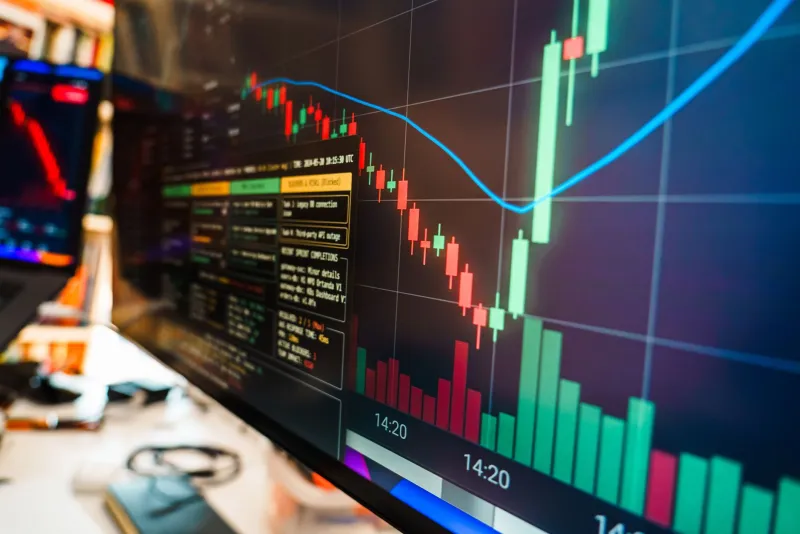
The foreign exchange market processes more than $7.5 trillion in daily volume, making it the largest and most liquid financial market on earth. For decades, that volume was driven largely by institutional desks, central bank interventions, and the intuition of seasoned traders reading economic calendars and price charts. That paradigm is eroding. Artificial intelligence and machine learning have entered the currency market not as experimental novelties but as operational infrastructure — and the implications for US-based traders are substantial.
From Rule-Based Systems to Adaptive Intelligence
Early algorithmic trading in forex relied on rigid, rule-based systems: if the EUR/USD crosses a moving average, execute a buy order. These systems were efficient but brittle, prone to failure during regime changes or unexpected macroeconomic events. Modern machine learning models operate differently. They do not follow predetermined rules; they derive patterns from vast datasets and continuously update their assumptions as new information arrives.
Natural language processing (NLP) models, for example, now scan thousands of news articles, Federal Reserve statements, and social media feeds in milliseconds, assigning sentiment scores to currency pairs before human traders have even opened the headline. Recurrent neural networks (RNNs) and long short-term memory (LSTM) architectures analyze sequential price data to detect subtle momentum shifts that would be invisible on a standard candlestick chart. Reinforcement learning systems go further still, training themselves through simulated trading environments to optimize execution strategies across varying market conditions.
These are not theoretical constructs. Firms such as Two Sigma, Renaissance Technologies, and a growing cohort of specialized fintech startups have deployed these architectures at scale, and their performance benchmarks are reshaping expectations across the industry.
Real-World Applications Professional Traders Are Using Now
For professional traders operating in the US market, practical AI adoption tends to cluster around three core functions: signal generation, risk management, and execution optimization.
Signal generation is perhaps the most visible application. Platforms now offer AI-driven analysis dashboards that synthesize technical indicators, macroeconomic data releases, and cross-asset correlations into probability-weighted trade signals. A trader monitoring the USD/JPY pair, for instance, might receive an AI-generated alert noting an elevated probability of yen appreciation based on diverging US-Japan yield spreads, combined with bearish dollar sentiment detected across major financial news outlets.
Risk management has also been transformed. Traditional stop-loss placements were largely static, set at fixed pip distances from entry. Machine learning models can dynamically adjust risk parameters in real time, accounting for volatility regime shifts, liquidity conditions, and correlated position exposure across a trader's entire portfolio. This adaptive approach reduces the likelihood of being stopped out during temporary noise while maintaining meaningful protection against adverse trend reversals.
Execution optimization addresses the often-overlooked cost of market impact. For larger institutional positions, AI-driven execution algorithms break orders into smaller tranches, timing their placement to minimize slippage and avoid telegraphing directional intent to the broader market.
Manual vs. Algorithmic Performance: What the Data Suggests
The performance comparison between human discretionary traders and algorithmic systems is nuanced and context-dependent. Algorithms tend to outperform in high-frequency, data-rich environments where speed and consistency are paramount. Human traders retain an edge in interpreting genuinely novel geopolitical events — situations where historical data offers limited guidance and contextual judgment is irreplaceable.
Research published by industry analysts suggests that hybrid approaches — where AI handles signal screening and execution logistics while human traders make final directional decisions — consistently outperform either pure-human or pure-algorithmic strategies in risk-adjusted terms. This model, often called augmented trading, is increasingly the standard at mid-size and large US trading firms.
For individual retail traders, the practical implication is clear: ignoring AI-driven tools does not preserve some form of authentic trading purity; it simply means competing against better-equipped participants with fewer analytical resources.
The Regulatory Landscape US Traders Must Understand
Deploying AI-driven trading tools in the United States involves navigating a regulatory framework that has not always kept pace with technological development. The Commodity Futures Trading Commission (CFTC) and the Securities and Exchange Commission (SEC) both maintain oversight over various components of algorithmic and automated trading, and their guidance continues to evolve.
US traders using third-party AI platforms should verify that those platforms comply with applicable registration requirements and that their algorithmic strategies do not inadvertently engage in behaviors regulators classify as market manipulation — including layering or spoofing, which automated systems can produce unintentionally if not properly configured.
The CFTC's Regulation Automated Trading (Reg AT) framework, though not fully finalized in its original form, signals the direction of regulatory intent: greater transparency, pre-trade risk controls, and source code accountability for firms using algorithmic strategies. Traders and firms operating at institutional scale should maintain documentation of their AI model logic and risk parameters as a matter of compliance hygiene.
For retail traders using commercially available AI analysis tools rather than building proprietary algorithms, regulatory exposure is generally lower, but due diligence on platform licensing and data sourcing remains essential.
Positioning for an AI-Native Trading Environment
The traders who will thrive in the coming years are not necessarily those who build their own neural networks. They are those who develop the financial intelligence to evaluate AI-generated signals critically, integrate those signals into coherent macro frameworks, and maintain the discipline to override algorithmic recommendations when market context demands human judgment.
At IQFinex, we recognize that precision intelligence is not about replacing the trader — it is about amplifying the quality of every decision the trader makes. Machine learning has raised the analytical floor for everyone participating in global currency markets. Understanding how these tools work, where they excel, and where they fall short is no longer optional knowledge for serious US traders. It is foundational literacy for operating in markets as they exist today.