Microseconds Behind: The Hidden Data Latency Problem Costing US Traders Real Money
Every professional trader knows that information is the most perishable commodity in financial markets. What fewer appreciate is precisely how quickly that perishability sets in. The moment a price event occurs on an exchange floor — or, more accurately, within an exchange matching engine — a race begins. That race is measured not in seconds, but in microseconds and nanoseconds. And for the overwhelming majority of US retail traders, the finish line has already been crossed before the gun even sounds.
This is the data lag trap: the structural, largely invisible disadvantage built into the architecture of modern market data dissemination. It is not a glitch. It is not a temporary inefficiency waiting to be corrected. It is a feature of the system that institutional participants have spent billions of dollars to exploit — and that most individual traders have never been formally warned about.
How Market Data Actually Travels
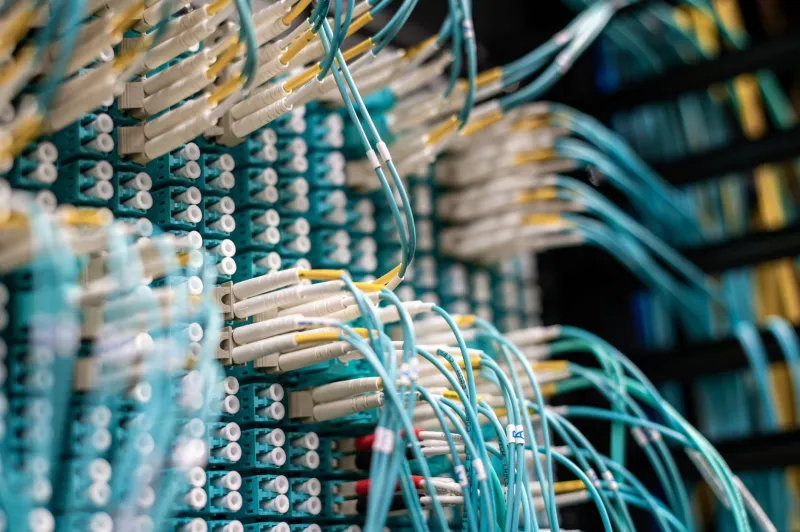
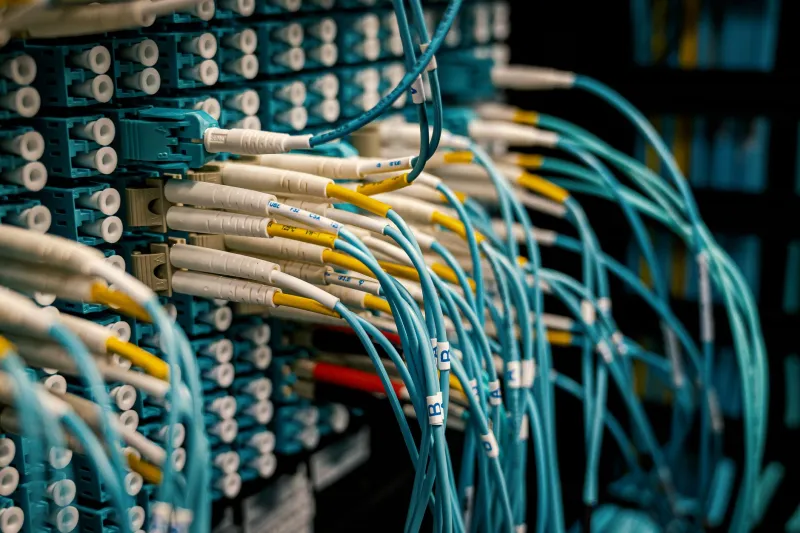
To understand the problem, it helps to trace the journey of a single price update. When a trade executes on the New York Stock Exchange, the matching engine generates a message. That message travels through the exchange's internal network, is formatted into a standardized feed, and is then distributed to data consumers. Those consumers range from co-located high-frequency trading firms — whose servers sit in the same data center as the exchange itself — to retail brokerage platforms that aggregate, repackage, and redistribute data through their own technology stacks.
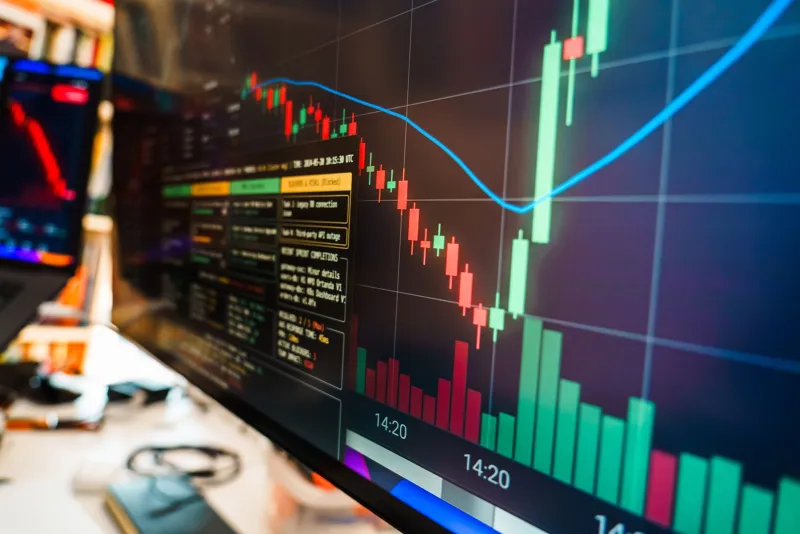
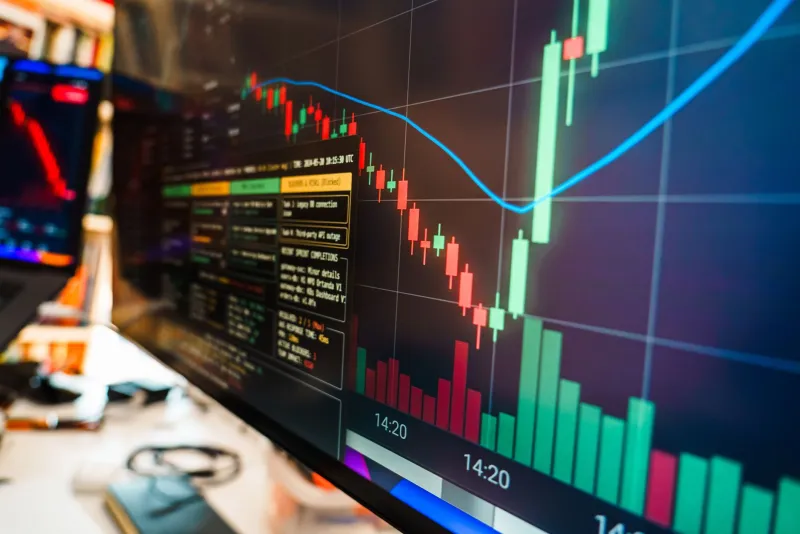
At each stage of that chain, latency accumulates. Co-location clients may receive a price update in under a microsecond. A well-resourced institutional desk using a direct market data feed might see it in five to ten milliseconds. A retail trader accessing a standard brokerage platform could be looking at a delay of anywhere from 100 milliseconds to several seconds, depending on the broker's infrastructure, the trader's internet connection, and the geographic distance between the trader's device and the data server.
In isolation, a 200-millisecond delay sounds trivial. In a market where prices can move meaningfully in under 50 milliseconds, it represents multiple generations of stale information.
The Institutional Exploitation Window
High-frequency trading firms and certain proprietary desks have built entire business models around these latency differentials. By co-locating servers at exchange data centers, subscribing to ultra-low-latency direct feeds, and deploying custom networking hardware — including microwave transmission towers that shave microseconds off cross-country data routes — these participants effectively trade in a different temporal reality than retail traders.
The exploitation is most visible in a practice known as latency arbitrage. When a price update hits one venue before another, a fast trader can simultaneously buy at the stale price on the slower venue and sell at the updated price elsewhere, capturing a risk-free spread. This happens thousands of times per second across US equity markets alone. The individual take per trade is minuscule. The aggregate annual transfer from slower participants to faster ones runs into the billions.
For US traders operating in international markets, the problem compounds. A trader monitoring both US equities and, say, European fixed income futures must contend not only with the baseline latency of each feed, but also with the synchronization gap between them. When a macro event moves both markets simultaneously, the trader's consolidated view may be presenting prices from two different moments in time — a recipe for mispriced hedges and unexpected execution outcomes.
Which Global Markets Have the Worst Lag Problems
Not all markets are created equal when it comes to data infrastructure. US equity markets, for all their latency asymmetries, benefit from decades of regulatory pressure and competitive investment in data dissemination. The Securities Information Processor (SIP), which consolidates quote and trade data from all US equity exchanges, is a mandated public utility with specific performance requirements.
Emerging market exchanges present a starkly different picture. Many venues in Southeast Asia, Latin America, and parts of Eastern Europe operate with aging matching engines and limited co-location infrastructure. Direct market data feeds may be unavailable or prohibitively expensive for foreign participants. Consolidated data, where it exists, often passes through multiple intermediary vendors, each adding their own processing delay.
Foreign exchange markets introduce yet another layer of complexity. Because FX trading is decentralized — occurring across a fragmented network of banks, electronic communication networks, and retail aggregators — there is no single authoritative price. The 'spot rate' a retail trader sees reflects a specific liquidity provider's quote at a specific moment, filtered through their broker's aggregation logic. During periods of volatility, the gap between that displayed rate and the rate at which a trade actually executes can widen dramatically.
Japanese equity markets deserve specific mention. The Tokyo Stock Exchange's Arrowhead matching system is technically sophisticated, but time zone differences mean US-based traders monitoring Japanese markets in real time are often doing so through data pipelines with additional relay points. Latency on Japanese market data reaching US retail platforms has been documented at multiples of what domestic Japanese institutional participants experience.
Practical Strategies for Compensating for Data Lag
Acknowledging the disadvantage is the first step. The second is building a trading approach that does not depend on winning races you cannot win.
Trade on structure, not on ticks. Strategies that depend on reacting to individual price prints — scalping, momentum chasing on short timeframes — place the retail trader in direct competition with participants who have insurmountable infrastructure advantages. Strategies built around longer-duration price structures, fundamental catalysts, or relative value relationships are less sensitive to microsecond data accuracy.
Understand your broker's data source. Most retail brokers do not publish detailed latency disclosures, but meaningful differences exist. Brokers that offer direct market access (DMA) and publish their co-location arrangements provide faster, more reliable data than those relying entirely on third-party aggregators. Asking your broker directly about their data feed architecture — and reviewing any available execution quality statistics — is a reasonable due diligence step.
Use limit orders as a structural hedge against staleness. A market order submitted on the basis of a potentially stale price is an invitation to receive a fill at a rate significantly worse than expected. Limit orders constrain execution to a defined price level, effectively forcing the market to come to you rather than requiring you to react to a price that may already have moved.
Monitor order book depth, not just last price. While top-of-book data is subject to the same latency issues as trade prints, depth-of-book information — particularly the size available at multiple price levels — changes more slowly and provides a more stable picture of near-term market conditions. Traders who incorporate level-two data into their decision process are less likely to be ambushed by a price that has already moved through the level they were targeting.
Account for lag explicitly in international strategies. When trading across markets in different time zones or with different data infrastructure quality, build an explicit assumption of information staleness into your position sizing and entry logic. If you cannot verify that your data on a particular market is current within a defined tolerance, treat it as indicative rather than actionable.
The Transparency Imperative
The latency gap between institutional and retail market participants is not a new problem, but it is one that has grown more consequential as trading speeds have accelerated. Regulatory bodies including the SEC have periodically examined the fairness implications of tiered market access, with the most recent Market Structure Reform proposals touching on consolidated tape improvements and access equity.
For individual traders, however, regulatory remedies operate on a different timescale than trading decisions. The practical reality is that data lag is a structural cost of participation in modern markets — one that can be managed and partially mitigated, but not eliminated. Building a trading framework that accounts honestly for this disadvantage is not pessimism. It is precision.