Broken Mirrors: How Fragmented Order Book Transparency Distorts Price Discovery for American Traders
For most American traders, the assumption is straightforward: a price is a price. If a stock or derivative is quoted at a given level on two different exchanges, the effective cost of execution should be roughly equivalent. That assumption, reasonable as it sounds, is quietly dismantled the moment you step outside US-regulated markets.
Across exchanges in Southeast Asia, Eastern Europe, and even parts of Western Europe, order book transparency is governed by radically different disclosure standards. The result is a landscape where sophisticated local participants — armed with superior data infrastructure — routinely exploit information asymmetries that US traders don't even know exist.
The Transparency Gap Nobody Talks About
In the United States, Regulation NMS and the consolidated tape have created a relatively coherent picture of market depth. Traders operating through domestic venues receive standardized Level 2 data, giving them meaningful visibility into bid-ask spreads and queue positioning. It's an imperfect system, but it's a shared one.
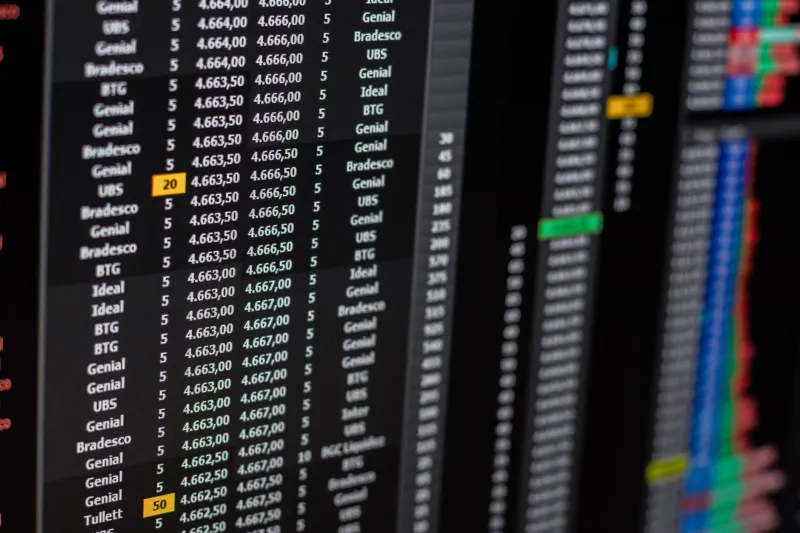
Step into markets governed by different regulatory frameworks, and that coherence evaporates. On exchanges across Southeast Asia, for example, full order book data is frequently tiered — with premium access reserved for participants paying for co-location services or direct market data agreements with the exchange itself. Retail and mid-tier institutional traders operating through standard brokerage feeds often receive delayed or aggregated snapshots that bear little resemblance to the live order book.
The consequence is a form of artificial price discovery. The quoted price you see is not fictitious, but it represents an incomplete picture of where liquidity actually sits. When you act on that data, you're not trading on the market — you're trading on a reflection of it.
How Sophisticated Players Exploit the Gap
Consider a practical scenario. A US-based fund manager identifies an opportunity in a mid-cap equity listed on a major Southeast Asian exchange. The Level 1 data visible through their prime broker's feed shows a tight spread and apparent depth at the best bid and offer. They submit a market order.
What they don't see — because their data feed doesn't capture it — is that the visible depth is largely composed of algorithmic orders placed by local high-frequency participants who are simultaneously monitoring the full order book. The moment a foreign order of meaningful size enters the queue, those algorithms reprice or withdraw. The effective fill lands several basis points worse than the quoted price suggested.
This isn't manipulation in the traditional sense. It's the predictable consequence of asymmetric data access — and it's entirely legal under the rules of those exchanges. Local participants aren't doing anything prohibited. They simply have access to information that their foreign counterparts do not.
Similar dynamics play out in European dark pools and certain Latin American equity markets, where fragmented reporting obligations mean that a significant portion of daily volume is invisible to traders relying on standard consolidated feeds.
The Multi-Feed Illusion
One of the more counterintuitive findings for US traders who investigate this problem is that subscribing to additional data feeds doesn't necessarily solve it. In theory, aggregating multiple Level 2 sources should produce a more accurate picture of market depth. In practice, the feeds themselves are often sourced from the same underlying exchange data infrastructure — meaning you're purchasing the same incomplete picture multiple times with slightly different formatting.
True informational parity in these markets typically requires direct exchange co-location agreements, bilateral data-sharing arrangements, or partnerships with local market participants who have native access. For most retail and even mid-tier institutional traders, these options are either cost-prohibitive or operationally complex.
The implication is that a meaningful structural disadvantage exists — and it compounds over time. Each trade placed with imperfect price discovery data carries a small but real performance drag. Across hundreds of trades and multiple international positions, that drag becomes a measurable cost center.
What US Traders Can Actually Do
The first and most important step is calibration — specifically, recalibrating your assumptions about execution quality in non-US markets. Treating international venues as operationally equivalent to domestic ones is the foundational error that enables this problem to persist undetected.
Practical countermeasures include:
Execution quality audits. Systematically compare your actual fills against the best available quoted price at the moment of order submission. If your slippage on international trades is consistently worse than your domestic baseline — particularly on orders of moderate size — you are likely experiencing the effects of order book opacity. This data should inform your per-trade cost model.
Venue selection based on transparency ratings. Not all international exchanges are equally opaque. The London Stock Exchange, Deutsche Börse, and Japan Exchange Group all operate with disclosure standards closer to US norms than many emerging market venues. Concentrating international exposure in markets with stronger transparency obligations reduces — though does not eliminate — the informational disadvantage.
Algorithmic order slicing. Breaking larger orders into smaller tranches and executing them over extended time windows reduces your visibility to order-detection algorithms. It doesn't solve the underlying data asymmetry, but it limits the degree to which local participants can front-run your intentions.
Local prime broker relationships. For institutional traders with sufficient AUM, establishing relationships with brokers who have direct exchange memberships in target markets can provide materially better data access and execution quality. The cost of these relationships must be weighed against the execution drag they mitigate.
The Broader Structural Question
The fragmentation of global order book transparency is not accidental. It reflects decades of divergent regulatory development across jurisdictions that have never been required to harmonize their market structure standards. The absence of a global equivalent to Regulation NMS means that the playing field will remain uneven for the foreseeable future.
For US traders, the practical takeaway is not to avoid international markets — the diversification and alpha opportunities they present remain compelling. The takeaway is to approach those markets with a clear-eyed understanding of the informational environment you're operating in. Price discovery, in many corners of the global market, is less a mirror than a mosaic — and the pieces you can see don't always tell the complete story.