When Hedges Become Traps: The Correlation Collapse That Strikes at the Worst Possible Moment
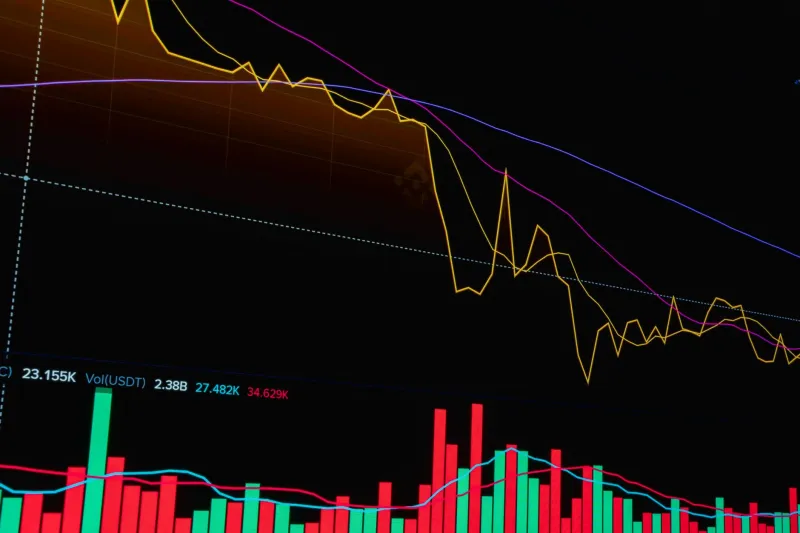
The promise of international diversification rests on a simple statistical premise: assets in different countries, governed by different economic cycles and denominated in different currencies, should not move together. When US equities fall, European bonds should hold. When domestic credit spreads widen, Asian sovereign debt should provide a cushion. The math is clean, the logic is intuitive, and the historical data — measured across calm periods — appears to support it.
The problem is that financial crises are not calm periods. And during the specific moments when diversification is most urgently needed, the correlations that justified the international hedge in the first place have a persistent and well-documented tendency to collapse entirely.
This is not a new observation. Academics have studied it. Risk managers have warned about it. And yet, portfolio after portfolio continues to be constructed on correlation assumptions that fail precisely when they are tested most severely.
The Mechanics of Correlation Breakdown
Under normal market conditions, asset prices are driven primarily by the idiosyncratic factors specific to each security, sector, or geography. A German industrial company's stock price reflects German manufacturing data, European Central Bank policy, and company-specific earnings dynamics. A US technology company responds to Federal Reserve guidance, domestic consumer spending, and its own competitive position. These distinct drivers produce low correlation between the two assets over time.
During a crisis, however, a single dominant force overwhelms all idiosyncratic factors: the simultaneous liquidation of risk assets by investors who need cash. This forced selling is not driven by fundamental analysis. It is driven by margin calls, redemption pressure, risk-limit breaches, and the basic human imperative to reduce exposure when uncertainty is highest. It affects every asset class, in every geography, simultaneously.
The result is a phenomenon sometimes called 'correlation going to one' — a compression of asset-price relationships toward perfect co-movement precisely at the moment when divergence was most relied upon. US equities fall. European equities fall harder. Emerging market equities fall hardest. Investment-grade bonds, typically a safe haven, sell off as institutional investors liquidate their most liquid holdings to meet obligations elsewhere. Commodities drop. Currencies in smaller economies depreciate sharply. The portfolio that looked beautifully diversified on a spreadsheet turns out to hold a single, undiversified bet on global risk appetite.
Case Studies in Correlation Failure
The 2020 Pandemic Shock
In March 2020, the speed and synchronicity of the global asset sell-off provided one of the most striking illustrations of correlation collapse in recent memory. Over a roughly three-week period, US equities (as measured by the S&P 500) fell approximately 34 percent. European equities declined by comparable magnitudes. Emerging market equities fell further still. More striking was the behavior of US Treasury bonds — traditionally the most reliable crisis hedge for US-based portfolios. For a brief but significant period in mid-March, even Treasuries were sold aggressively, as institutional investors converted every available liquid holding into cash. Gold, another conventional safe haven, also dropped sharply before recovering.
Portfolios that had been structured with explicit international diversification — overweighting Asian or European equities relative to US holdings, or including EM sovereign bonds as a yield-enhancement hedge — experienced losses that their pre-crisis correlation models had assigned near-zero probability.
The 2022 Rate Shock
The 2022 experience offered a different but equally instructive correlation failure. As the Federal Reserve embarked on its most aggressive tightening cycle in four decades, the conventional wisdom held that international equities — particularly in markets where central banks were moving more slowly — would provide relative insulation. They did not. The MSCI World ex-US index declined by over 15 percent in dollar terms. Emerging market equities fell even further. Simultaneously, global bonds, which had historically provided a counterweight to equity drawdowns, delivered their worst annual performance in decades as rate increases rippled across every major fixed income market.
US investors who had constructed international fixed income positions as an equity hedge found themselves holding two simultaneously declining assets — a direct consequence of the correlation between global rate sensitivity overriding the assumed independence of different geographic markets.
Which Correlation Breakdowns Are Predictable
Not every crisis-driven correlation shift is equally unpredictable. Certain conditions reliably precede the compression of cross-asset relationships, and sophisticated portfolio managers have developed frameworks for identifying elevated correlation risk before it fully materializes.
Global liquidity contractions are the most reliable precursor. When the Federal Reserve tightens aggressively and simultaneously other major central banks are reducing balance sheets or raising rates, the withdrawal of liquidity from global markets creates conditions where forced selling becomes more likely across all geographies simultaneously. Monitoring the aggregate direction of G4 central bank policy provides a leading indicator of correlation risk elevation.
Dollar strengthening cycles are a related signal. A rising US dollar creates funding pressure for entities — governments, corporations, and investors — that have borrowed in dollars but generate revenues in other currencies. This pressure is not confined to one geography; it affects every USD-denominated borrower globally. When the dollar strengthens rapidly, the resulting stress tends to produce synchronized selling across EM assets in particular, regardless of each country's individual fundamentals.
Volatility regime changes offer a more technical signal. When the VIX crosses above certain thresholds — historically, sustained readings above 30 have been particularly significant — the behavior of cross-asset correlations shifts structurally. Portfolio strategies calibrated on correlations measured during low-volatility regimes are essentially operating with the wrong inputs during high-volatility periods.
Positioning Ahead of Correlation Breakdown
The practical challenge for US traders is constructing portfolios that retain genuine diversification benefits even under stress conditions, rather than merely appearing diversified based on calm-period statistics.
Stress-test correlations, not just average correlations. Modern portfolio construction tools allow for scenario-based correlation matrices that replace historical averages with crisis-period estimates. Portfolios should be evaluated against both their expected performance under normal conditions and their behavior under assumptions that correlations compress toward crisis-period levels.
Favor structural hedges over correlation-dependent ones. Options-based tail risk protection, for example, does not depend on the relationship between two assets remaining stable. A put option on a US equity index will pay off in a sell-off regardless of what European bonds are doing simultaneously. The cost of this protection is explicit and known in advance — a significant advantage over correlation-dependent hedges, whose cost only becomes apparent when they fail.
Diversify across uncorrelated risk factors, not just geographies. The distinction matters enormously. Two assets in different countries may still share the same underlying risk factor — global risk appetite, dollar funding conditions, or commodity prices. True diversification requires identifying exposures to genuinely independent drivers: different economic cycle phases, different liquidity profiles, different sensitivity to the key macro variables that dominate crisis periods.
Maintain liquidity reserves specifically for crisis deployment. One of the most underappreciated aspects of correlation breakdown is that it simultaneously creates opportunity. Assets that are sold indiscriminately during a liquidity crisis often recover sharply once the forced selling abates. Investors who have preserved dry powder — and who have not been forced into their own liquidations by over-leveraged positions — are positioned to benefit from the overshoot that crisis correlations produce.
Rethinking the Diversification Doctrine
International diversification remains a valid and important principle of portfolio construction. The evidence for its long-term benefits is robust. What requires revision is the naive version of that principle — the assumption that geographic dispersion alone provides protection under all market conditions.
The more accurate framework treats international diversification as a tool that works reliably in normal environments and unreliably in crisis environments. Building a portfolio that acknowledges this distinction — one that does not depend entirely on crisis-period correlations behaving as they do during calm periods — is the more demanding but ultimately more defensible approach to global risk management.